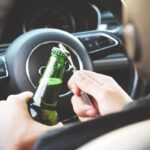
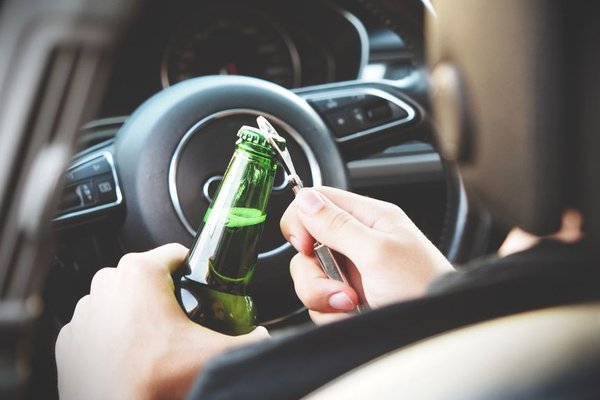
A person can face a drunk in charge offence without driving anywhere. That surprises people who have parked after drinking, waited for a lift or fallen asleep in their car. UK law treats being in charge of a vehicle while over the alcohol limit as a separate offence from actually driving over the limit.
A stationary engine does not automatically make someone innocent, but being near a car after drinking is not automatically a crime either. The circumstances, alcohol evidence and possibility of driving all matter.
What is the drunk in charge offence?
In Great Britain, section 5(1)(b) of the Road Traffic Act 1988 makes it an offence to be in charge of a motor vehicle on a road or other public place while the proportion of alcohol in your breath, blood or urine exceeds the prescribed limit. Northern Ireland has a corresponding provision in Article 16 of the Road Traffic (Northern Ireland) Order 1995.
The vehicle need not be moving. Whether someone was in charge is assessed from the evidence, not a single test based on where someone sat or who owned the car.
A related offence concerns being in charge while unfit through drink or drugs. In Great Britain, section 4(2) addresses impaired fitness to drive, rather than requiring proof that a particular alcohol threshold was exceeded.
How does it differ from drink driving?
Driving over the prescribed limit requires proof of driving or attempting to drive. For an in charge vehicle offence, the prosecution does not need to establish that the vehicle moved, or that anyone attempted to drive it.
Consider someone leaving a pub and sitting in a parked car to shelter from the rain. If the person is over the limit and remains legally in charge of that vehicle, an investigation is possible even when the keys never enter the ignition.
This is why drunk in charge law includes a distinct defence: the absence of any likelihood of driving while still above the limit. That defence is not the same as denying that a journey took place.
How do police decide who was in charge?
There is no automatic rule that possession of the keys proves guilt. Officers and courts examine the whole situation, including access to the car, the person’s ability to control it and arrangements for its future use.
Keys and seating position
Being in the driver’s seat with keys available may suggest control. Sitting in a rear seat after giving the keys to a sober friend could point in another direction. Neither circumstance guarantees a particular outcome.
Where the vehicle was parked
The law refers to a road or other public place. A car park can qualify even when privately owned if members of the public have access. A location is not automatically outside the legislation merely because a business owns it.
What was supposed to happen next?
A prearranged lift, a sober person holding the keys, statements made to police and relevant messages may help establish what was realistically likely. Courts consider whether an account is supported by objective evidence.
Can sleeping in your car lead to a charge?
Yes. Imagine leaving a party, locking the doors and sleeping in the driver’s seat with the keys in your pocket. You may genuinely intend to stay until morning, but sleeping is not itself a legal exemption. Police could still examine whether you were in charge while over the limit.
The safer decision is to leave the car and travel by taxi, public transport or with a sober driver. Do not assume a few hours’ sleep will clear alcohol from your body. For more context, see our guide to drink-driving limits in the UK.
What must prosecutors prove?
For an excess-alcohol in-charge allegation, prosecutors generally must prove beyond reasonable doubt that the person was in charge of a motor vehicle on a road or other public place and exceeded the prescribed alcohol limit at the relevant time. Breath, blood or urine evidence may be central to the case.
The limits are not identical throughout the UK. The breath limit is 35 micrograms per 100 millilitres in England, Wales and Northern Ireland, compared with 22 micrograms in Scotland. The respective blood limits are 80 and 50 milligrams per 100 millilitres.
An over-limit result alone does not resolve whether someone was in charge. Equally, evidence that an engine was switched off does not settle the question in the other direction.
What defences may be available?
Section 5(2) of the Road Traffic Act 1988 provides a defence where the person proves that, at the relevant time, there was no likelihood of driving while their alcohol concentration remained likely to exceed the limit. Northern Ireland has a comparable provision.
Simply telling the court, “I did not intend to drive,” may not be enough. A court can examine whether the circumstances genuinely supported that claim. Evidence of alternative transport, surrendered keys or arrangements for someone else to collect the vehicle may be relevant.
The separate offence of being in charge while unfit also has a no-likelihood provision, concerned with driving while the person remained unfit. The exact allegation and available evidence need careful review. Anyone charged should obtain advice from a qualified motoring solicitor.
Drunk in charge penalties
Being convicted can have serious consequences, even without actual driving. Government guidance lists up to three months in prison, a fine of up to £2,500 and a possible driving ban for being in charge while over the limit or unfit through drink.
Where a ban is not imposed, the relevant offence normally attracts 10 penalty points. Endorsement code DR40 covers being in charge with excess alcohol, while DR50 concerns being in charge while unfit through drink. This differs from driving over the limit, for which disqualification is normally mandatory.
Insurance costs and driving-related employment may also be affected. Our guide to driving disqualifications and penalty points explores those consequences in more detail.
Frequently asked questions
Can I be charged if my engine was off?
Yes. A parked vehicle can still be involved. Police must establish the legal elements of the offence; switching off the engine does not automatically defeat an allegation.
Does holding the keys make me guilty?
No. Keys may be important evidence of control, but they are not the entire test. The location, circumstances and other available evidence also matter.
Will I automatically lose my licence?
Not necessarily. A ban is possible but not automatic for an in-charge offence. The court may instead impose 10 penalty points, depending on the circumstances.
What should I do if I am accused?
Seek legal advice promptly and preserve relevant messages, collection arrangements and witness details. Our guide to preparing for a motoring court hearing may provide general background, but individual advice is essential.
Why the distinction matters
The drunk in charge offence is about legal control of a vehicle while affected by alcohol, not just whether the wheels turned. A parked car is not a guaranteed safe haven from prosecution, but the law also recognises circumstances in which there was no likelihood of driving before the alcohol level fell. Understanding that distinction is the starting point for assessing any allegation.