If you have searched for “DUI meaning UK”, you have probably encountered an American term for something British law describes differently. DUI means “driving under the influence”, usually of alcohol or drugs. In the UK, however, a police officer or court is more likely to refer to drink driving, drug driving, driving while unfit, or driving with excess alcohol. The precise offence depends on what happened, not simply whether someone had a drink.
What does DUI mean in the UK?
DUI is an American abbreviation for driving under the influence. It may refer to alcohol, drugs or both, depending on the US jurisdiction. British drivers sometimes use the term informally, but “DUI” is not the standard name of a specific UK motoring offence.
In everyday British conversation, “drink driving” is the usual phrase for driving after consuming too much alcohol. “Drug driving” describes offences involving drugs, including some prescribed medicines. The legal description is more precise: a driver can be prosecuted for exceeding an alcohol limit or for being impaired by drink or drugs.
DUI versus DWI: is there a difference in British law?
Another American abbreviation is DWI, commonly expanded as “driving while intoxicated” or “driving while impaired”. In the United States, the distinction between DUI and DWI depends on the state.
For anyone searching “DWI meaning UK”, the answer is straightforward: neither DUI nor DWI creates a separate offence category under UK road traffic law. British charges use their own statutory wording. A US article suggesting that DUI is always less serious than DWI should not be applied to a case in England, Wales, Scotland or Northern Ireland.
Which UK offences cover drink and drug driving?
Driving with excess alcohol
In Great Britain, section 5 of the Road Traffic Act 1988 covers driving, attempting to drive, or being in charge of a motor vehicle with alcohol above the prescribed limit. Prosecuting someone for driving over the limit does not require proof that they were visibly swerving or driving dangerously.
Driving while unfit through drink or drugs
Section 4 of the same Act addresses being unfit to drive because of alcohol or drugs. This focuses on impaired driving ability and can apply even where an alcohol reading is below the numerical limit. It is a different question from how much alcohol was detected.
Drug driving and being in charge
Great Britain also has an offence involving concentrations of specified controlled drugs above legal thresholds. A medical defence may apply to certain lawfully prescribed medicines taken as directed, but it does not excuse driving while impaired. Northern Ireland has separate road traffic legislation; the specified-drug-limit offence used in Great Britain does not apply there in the same way.
Being “in charge” may be relevant even without driving. Whether a defence applies depends on the circumstances.
What are the UK drink-driving limits?
The alcohol limits are not identical across the UK. In England, Wales and Northern Ireland, the prescribed limit is 35 microgrammes of alcohol per 100 millilitres of breath, or 80 milligrammes per 100 millilitres of blood. In Scotland, it is lower: 22 microgrammes per 100 millilitres of breath, or 50 milligrammes per 100 millilitres of blood.
These figures describe alcohol concentration, not an allowance of a particular number of drinks. Body size, food intake and metabolism affect the reading. Alcohol can remain in your system the following morning. Our guide to how long alcohol stays in your system explains why guessing is unreliable.
The safest decision is not to drink before driving. Judgement and reactions can be affected even below the legal threshold.
What happens during a UK drink-driving stop?
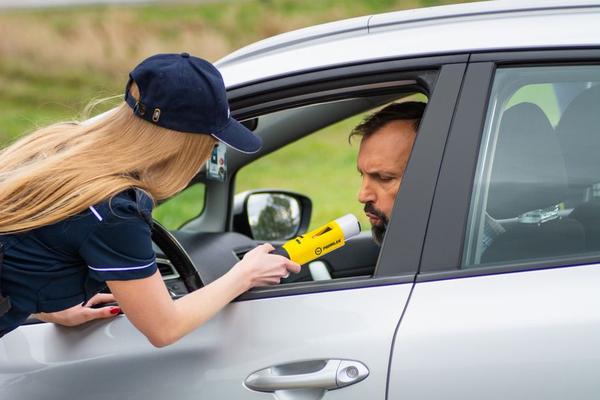
Police may require a roadside breath test following suspected drinking, a road traffic offence or a collision. A roadside reading is normally a preliminary check. If it indicates excess alcohol, the driver may be arrested and taken for an evidential test, usually at a police station.
Officers investigating suspected drug driving may use roadside screening or impairment assessments followed by evidential procedures. Refusing a legally required specimen without reasonable excuse can itself be an offence. Even a negative preliminary test does not necessarily end an investigation where impairment remains suspected.
If an arrest follows, the alleged offence and test evidence matter more than whether someone casually calls the incident a DUI.
What penalties can follow a drink-driving conviction?
For driving or attempting to drive while over the alcohol limit or unfit through drink in Great Britain, consequences can include a ban of at least 12 months, an unlimited fine and up to six months in prison. A repeat conviction within ten years can lead to a minimum three-year disqualification. Being in charge and other offences have different penalties.
Northern Ireland has its own sentencing provisions. Official guidance describes up to six months in prison, a fine of up to £5,000 and at least a 12-month ban for driving or attempting to drive while over the limit or unfit. Serious cases involving injury or death can attract far harsher sentences.
A conviction can also affect insurance, jobs requiring a licence and everyday travel. Our guide to drink-driving penalties and driving bans explains the wider consequences.
A practical example: the same driver, two different limits
Imagine someone travels from Manchester to Glasgow for a weekend. They remember the 35-microgramme breath limit used in England and assume it applies after dinner in Scotland. It does not: Scotland’s limit is 22 microgrammes per 100 millilitres of breath.
Organising a taxi, taking public transport or choosing a driver who does not drink removes that uncertainty. This also shows why searching for “DUI UK law” can be misleading: the useful question is which offence and local limit apply. Drivers taking medication should separately consult guidance on prescription medicines and drug driving.
Frequently asked questions
Is DUI a criminal offence in the UK?
The conduct described by DUI can be criminal, but the charge will normally be recorded under a British offence, such as driving with excess alcohol or driving while unfit. “DUI” itself is American shorthand.
Does DWI mean something different from DUI in the UK?
No fixed British legal distinction exists between these abbreviations. Their meanings vary across US states, whereas UK police and courts use specific drink-driving and drug-driving offences.
Can you be prosecuted below the alcohol limit?
Yes. Driving while unfit through drink or drugs is separate from exceeding an alcohol limit. Evidence of impaired ability can matter even where a measurement is below the prescribed threshold.
Is the drink-driving limit the same everywhere in the UK?
No. Scotland has a lower limit than England, Wales and Northern Ireland. Check the rules where you will drive, especially when crossing national borders.
Understanding the term without confusing the law
In a British context, DUI is best understood as an informal American label for drink or drug driving. It does not identify the precise offence, evidence or likely penalty. For UK drivers, the relevant questions are whether someone was impaired, whether a statutory limit was exceeded and which jurisdiction’s rules apply. Those distinctions offer a clearer answer than treating DUI and DWI as interchangeable British charges.